








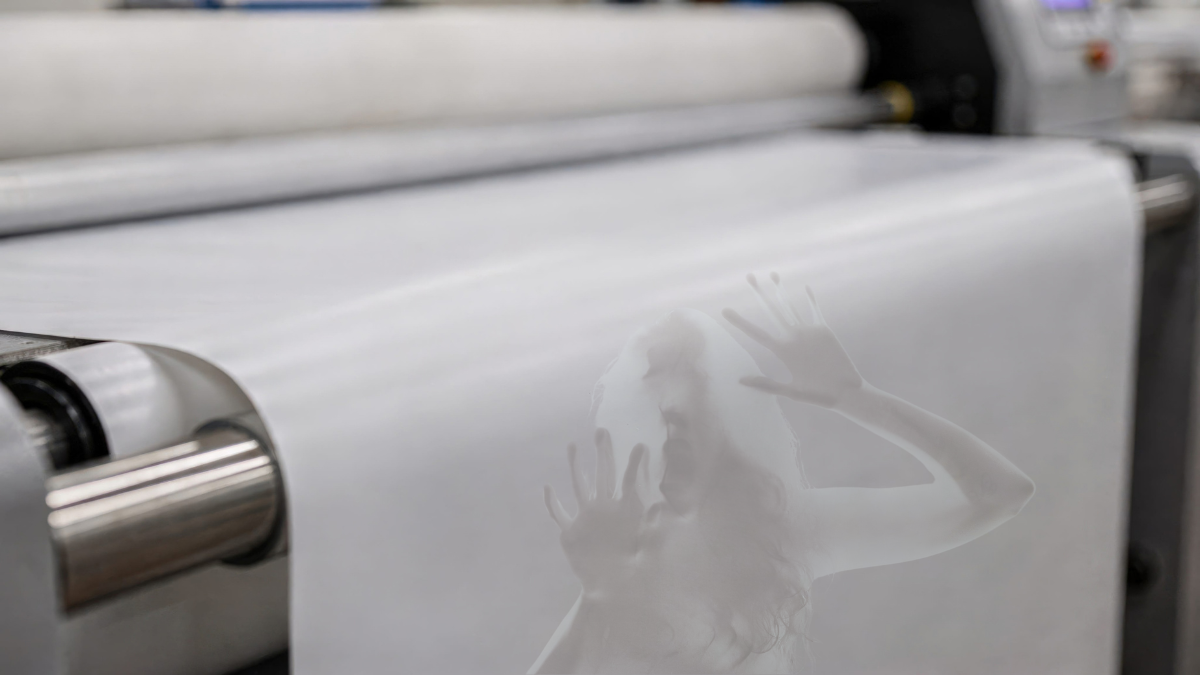
From mysterious images on the page to disappearing printing providers, some printing nightmares are all too real.
October is the season for ghosts, disappearing acts, and things that go bump in the night. But when it comes to commercial printing, ghosting isn’t something to laugh about.
And we’re not just talking about a printing company that stops returning your calls.
Ghosting is an actual printing problem that can leave faint, unwanted images or patterns on finished materials. Add in unanswered emails, uncertain deadlines, or a longtime printer that suddenly closes its doors, and you’ve got the makings of a real printing horror story.
The good news? Understanding what causes these problems and knowing what to expect from your printing partner can help you avoid some unpleasant surprises.
Let’s look at three kinds of ghosting no business wants to experience.
What Is Ghosting in Commercial Printing?
Ever noticed a faint duplicate image, shadow, or unexpected pattern appearing where it shouldn’t on a printed piece?
That’s one form of print ghosting.
In commercial printing, ghosting generally refers to an unintended image or pattern that appears on a printed sheet. Depending on the printing process, it may look like a lighter or darker version of another part of the design, or a subtle difference in the printed surface.
Two common types associated with offset printing are:
- Mechanical ghosting: Uneven ink distribution can cause a faint repeat of an image or variations in ink density on the printed sheet.
- Chemical ghosting, sometimes called gas or gloss ghosting: Interactions during ink drying can create a ghostlike pattern or difference in gloss, sometimes corresponding to an image on an adjacent sheet.
Both can affect the appearance of printed materials, although the causes and solutions are different.
And while a ghostly image might be perfectly appropriate for a Halloween invitation, it’s probably not what you intended for your company’s brochures, presentation folders, annual reports, or marketing materials.
What Causes Print Ghosting, and Can It Be Prevented?
Ghosting isn’t always the result of a single issue.
Depending on the printing method, contributing factors may include ink distribution, press settings, artwork layout, paper characteristics, and drying conditions.
That’s where production experience and quality control matter.
An experienced printing team can evaluate the design, materials, and production process to identify potential issues and determine what adjustments may help. These could involve modifying the layout, adjusting press conditions, or reviewing ink and drying requirements.
Not every instance of ghosting can be eliminated completely, but understanding the cause is an important step toward minimizing its appearance.
The takeaway: Print quality involves more than choosing the right paper and colors. It also depends on knowing how the design, materials, and printing process work together.
When Your Printing Partner Stops Responding
Of course, there’s another kind of ghosting businesses know all too well.
You send your artwork. Request a quote. Follow up about a deadline.
And then … silence.
Maybe you’re waiting for a proof, trying to confirm a delivery date, or making a last-minute adjustment before your materials go into production.
Whatever the situation, unanswered questions can create unnecessary stress, especially when your project is tied to an event, campaign, or important business deadline.
A dependable printing partner should help you:
- Understand your printing options and project requirements.
- Establish realistic production and delivery timelines.
- Review proofs and address questions before production.
- Navigate changes when specifications or deadlines shift.
- Stay informed as your project moves forward.
You shouldn’t have to chase down your printer to find out what’s happening with your project.
Clear communication, responsive service, and attention to detail are just as important as the finished product.
When Your Printing Provider Disappears Altogether
Sometimes, the disappearing act is permanent.
A longtime commercial printing company closes its doors, leaving customers searching for a new provider, sometimes with unfinished projects or upcoming deadlines.
If you’ve worked with the same printer for years, making the switch can raise plenty of questions.
Can a new printer work with your existing files and artwork? Will they be able to reproduce materials you’ve ordered before? Can they help you navigate different paper stocks, finishes, and production requirements?
The right printing partner should be willing to review your needs, explain your options, and help you plan the transition.
We’ve covered this topic in more detail in our related article, Need a New Commercial Printing Partner? Here’s What to Consider.
The goal isn’t simply to replace your previous printer. It’s to find a partner who can support your business now and as your needs change.
Experienced, Local Printing Support from Media Copy
At Media Copy, we’ve been helping businesses with their commercial printing needs for nearly 27 years.
Located in Media, Pennsylvania, and backed by the expanded resources of KDI Office Technology, our team combines local service with a broad range of business printing capabilities.
From brochures, booklets, and business cards to presentation materials, banners, signage, direct mail, and more, we help businesses plan and produce materials that meet their needs.
And if you’re transitioning from another printing provider, we understand that you may already have established artwork, specifications, and expectations.
We’re here to discuss your project, review your options, and help you determine the best approach.
Because working with a local, experienced printing partner should make your job easier, not more complicated.
Explore Media Copy’s commercial printing services or learn more about KDI’s complete business printing capabilities.
When Legal Printing Deadlines Are Scary Enough
For law firms and legal teams, printing challenges can carry additional consequences.
Court-related deadlines, large document productions, last-minute revisions, and trial preparation require accuracy, organization, and reliable communication.
That’s where Kelly + Partners, also part of KDI Office Technology, provides specialized legal printing and litigation support.
From document reproduction and digital imaging to Bates labeling, scanning, and large-format trial exhibits, Kelly + Partners helps legal teams manage demanding document workflows.
When deadlines are tight and accuracy matters, your printing partner should understand the importance of getting the details right.
With Media Copy and Kelly + Partners, KDI brings together commercial printing and specialized legal document production, supported by local expertise and a broader range of business printing solutions.
Don’t Let Your Next Printing Project Become a Ghost Story
Whether it’s an unwanted image on the page, unanswered messages, or a printing provider that’s disappeared altogether, ghosting is something every business would rather avoid.
The right printing partner brings more than equipment and ink to the table. They bring experience, clear communication, attention to detail, and an understanding of what your project requires.
This October, the only ghosts you should see are the ones in your Halloween decorations. Not on your prints. And definitely not from your printing partner.
Have a Printing Project in Mind?
Whether you’re planning new marketing materials, replacing a longtime printer, or managing a specialized document project, we’re here to help you explore your options.
For legal printing and litigation support, explore Kelly + Partners.
Related Reading
Frequently Asked Questions
What is ghosting in commercial printing?
Ghosting is a printing defect in which a faint, unintended image or pattern appears on a printed sheet. In offset printing, it can result from uneven ink distribution or interactions during ink drying. The appearance and cause depend on the printing process.
What causes gas ghosting in printing?
Gas ghosting, also called chemical or gloss ghosting, can occur when compounds released as ink dries affect the drying or gloss of ink on an adjacent printed sheet. The result may be a subtle image or difference in surface sheen.
Can print ghosting be prevented or corrected?
Some forms of ghosting can be reduced through appropriate press settings, ink management, production planning, and drying conditions. The right approach depends on the cause. Experienced printing professionals can evaluate the issue and recommend adjustments.
What should I do if my printing company stops responding?
Start by confirming your project’s status, deadline, and any outstanding approvals. If communication problems continue, consider speaking with another commercial printing provider. Having your artwork, specifications, quantities, and previous samples available can help make the transition easier.
Can Media Copy reproduce materials from my previous printing provider?
Media Copy can review existing artwork, files, specifications, and printed samples to determine the best approach for reproducing your materials. Depending on what’s available, the team can discuss options for matching previous projects or making updates.
Does KDI offer specialized legal printing services?
Yes. Through Kelly + Partners, KDI supports law firms and legal teams with document production, digital imaging, scanning, Bates labeling, trial exhibits, and other litigation-related printing services.
