







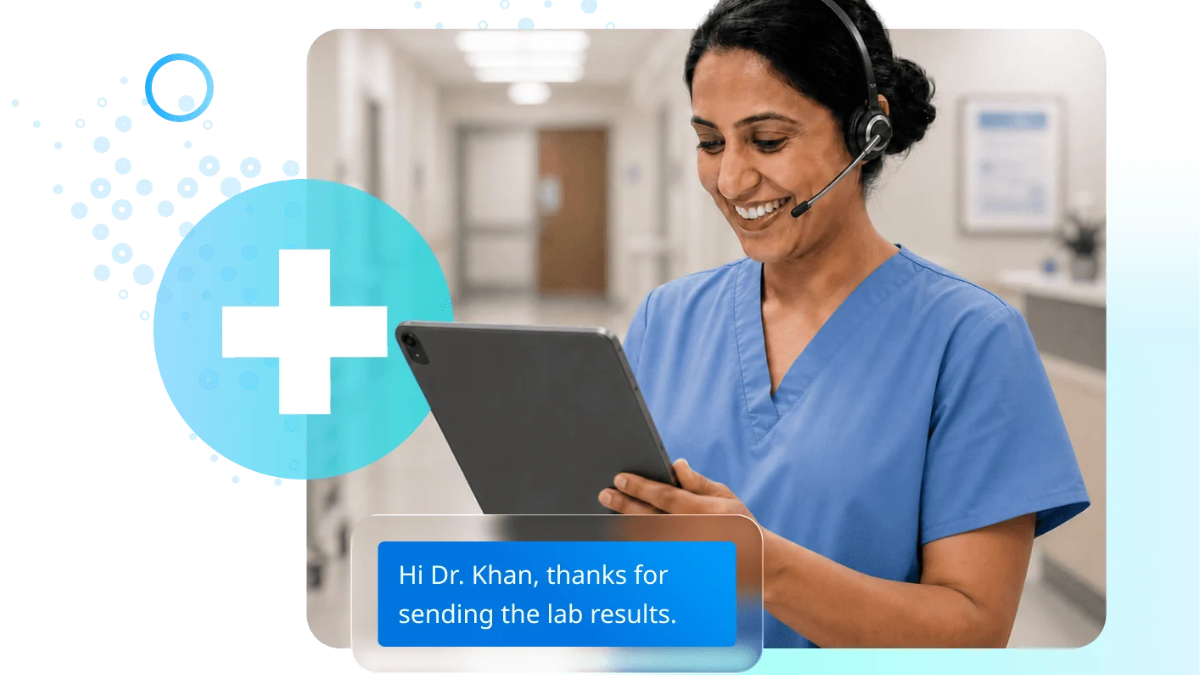
Healthcare practices depend on clear, timely communication. From scheduling appointments and answering patient questions to coordinating follow-ups and managing daily administrative tasks, the front office plays a critical role in the patient experience.
But when phone calls, scheduling, messaging, and patient information are managed through separate systems, even routine interactions can become more complicated than necessary.
Modern healthcare communication solutions can help bring these activities together, giving staff better access to information, reducing repetitive work, and making it easier for patients to connect with their providers.
Why Healthcare Communications Need a More Connected Approach
A patient calls to reschedule an appointment. Another needs information about an upcoming visit. Someone else wants to confirm a payment or reach the appropriate department.
Each request may seem straightforward, but handling it can require staff to switch between multiple applications, look up patient information, transfer calls, or manually enter the same details in more than one place.
These interruptions add up throughout the day.
A connected communications environment helps practices manage patient interactions more efficiently by bringing voice, messaging, and supported practice workflows into a more coordinated experience.
Rather than treating the business phone system as a standalone tool, healthcare organizations can make communications part of their broader technology strategy.
Make It Easier for Patients to Connect With Your Practice
Patients increasingly expect convenient ways to communicate with the organizations they rely on, including their healthcare providers.
For medical practices, that means looking beyond traditional phone calls to consider how patients schedule appointments, receive reminders, ask questions, and follow up after visits.
Depending on the applications and integrations selected, modern healthcare communications solutions can support:
- Online appointment scheduling: Giving patients convenient ways to request or manage appointments.
- Automated reminders and confirmations: Helping practices communicate upcoming appointments and reduce manual follow-up.
- Text messaging: Providing another channel for appropriate patient communications.
- Appointment recalls and outreach: Supporting ongoing communication with patients who need to schedule or return for care.
- More flexible communication options: Helping patients reach the practice through channels that fit their needs.
The goal isn’t to replace personal service. It’s to make routine interactions easier so staff can spend more time helping patients who need individual attention.
Give Front-Office Staff the Information They Need
When a patient calls, the conversation often begins with a familiar series of questions: Who is calling? What appointment are they referring to? Which department can help?
Without connected systems, employees may need to search through multiple applications before they can respond.
Healthcare-focused communications solutions can integrate with supported electronic health record (EHR) and practice management systems (PMS), helping staff access relevant patient context during communications.
For example, compatible integrations may provide patient information associated with an incoming call, reducing the time spent searching for records and helping staff direct the conversation more efficiently.
Connected workflows may also support activities such as digital forms, appointment management, and other administrative processes. For practices looking to reduce repetitive tasks across departments, business process automation can help streamline workflows beyond patient communications.
These capabilities can be especially valuable for busy medical and dental offices where front-desk employees regularly balance incoming calls, patient check-ins, scheduling, and administrative responsibilities.
Where AI Fits Into Healthcare Communications
Artificial intelligence is introducing additional ways for organizations to manage business communications.
Rather than requiring staff to manually capture every detail of a conversation, AI-assisted tools can help summarize calls, identify important discussion points, and provide information that supports follow-up.
Depending on the communications platform and features enabled, AI capabilities may include:
- AI-generated call recaps: Summaries that help employees review conversations and important details.
- Agent assistance: Tools designed to provide additional context and support during customer or patient interactions.
- Supervisor assistance: Insights that help managers review communication activity and support staff performance.
- Call archiving and review: Options for retaining and reviewing communications according to organizational requirements.
For healthcare organizations, these tools should be evaluated alongside privacy, security, access controls, and applicable regulatory requirements.
AI can help reduce administrative work, but it should support staff judgment and established patient communication procedures rather than replace them.
Connecting Communications With Existing Healthcare Technology
Through KDI Elevate UC for Healthcare, medical and dental practices can explore communications solutions that connect with supported EHR and practice management systems, helping bring patient interactions and front-office workflows together.
Available capabilities depend on the selected applications, supported EHR/PMS integrations, and implementation requirements.
A Better Patient Experience Starts Behind the Scenes
Improving patient communications isn’t simply about answering calls faster or adding more digital tools.
It’s about helping the people who manage those interactions work more effectively.
When staff can access relevant information, coordinate communications, and spend less time on repetitive administrative tasks, practices are better positioned to provide responsive, consistent service.
The right combination of business communications, connected applications, and AI-assisted capabilities can help support that goal.
Frequently Asked Questions About Healthcare Communications Solutions
What are healthcare communications solutions?
Healthcare communications solutions connect business phone systems, messaging, collaboration tools, and patient-facing workflows. Depending on the platform and integrations selected, they can help medical and dental practices manage calls, scheduling, reminders, patient information, and follow-up more efficiently.
Can healthcare phone systems integrate with electronic health records (EHR)?
Yes. Through KDI Elevate UC for Healthcare, powered by Intermedia, practices can explore integrations with supported electronic health record (EHR) and practice management systems (PMS). Intermedia’s healthcare offering supports connections with more than 15 EHR/PMS systems. Compatibility and available features depend on the specific system and integration.
What is Patient Screen Pop, and how does it help medical offices?
Patient Screen Pop displays relevant patient information when an incoming call is matched to a record in a supported EHR/PMS system. Staff may be able to view caller details, upcoming appointments, and recent visit information without manually searching for the record first. This can help front-office employees respond more efficiently.
Can patients schedule appointments outside normal office hours?
Yes. With supported scheduling applications, practices can offer online appointment booking and rescheduling outside regular office hours. Additional capabilities may include appointment reminders, waitlists, recalls, and no-show follow-up.
How can AI improve healthcare communications?
AI-assisted communications tools can help staff summarize calls, review important discussion points, and access insights about communication activity. Agent and supervisor assistance tools may also support call handling and staff coaching. Available features depend on the selected platform and services.
Are healthcare communications solutions appropriate for small medical and dental practices?
Yes. Healthcare communications solutions can support independent physician offices, dental practices, specialty providers, and multi-location organizations. Practices can evaluate the communication and workflow capabilities that address their immediate needs and expand as those needs change.
How KDI Can Help
KDI Office Technology helps healthcare organizations evaluate and implement business communications solutions that support their daily operations.
With KDI Elevate, practices can modernize their business phone systems and connect employees through cloud-based voice, messaging, and collaboration tools.
KDI can also help practices explore healthcare-specific capabilities, including supported EHR/PMS integrations, patient communication workflows, and AI-assisted tools.
Whether you’re replacing an aging phone system, looking to reduce front-office workload, or exploring ways to improve patient communications, KDI can help you evaluate the right solutions for your practice.
Ready to explore smarter communications for your healthcare organization?
Explore KDI Elevate UC for Healthcare →
