








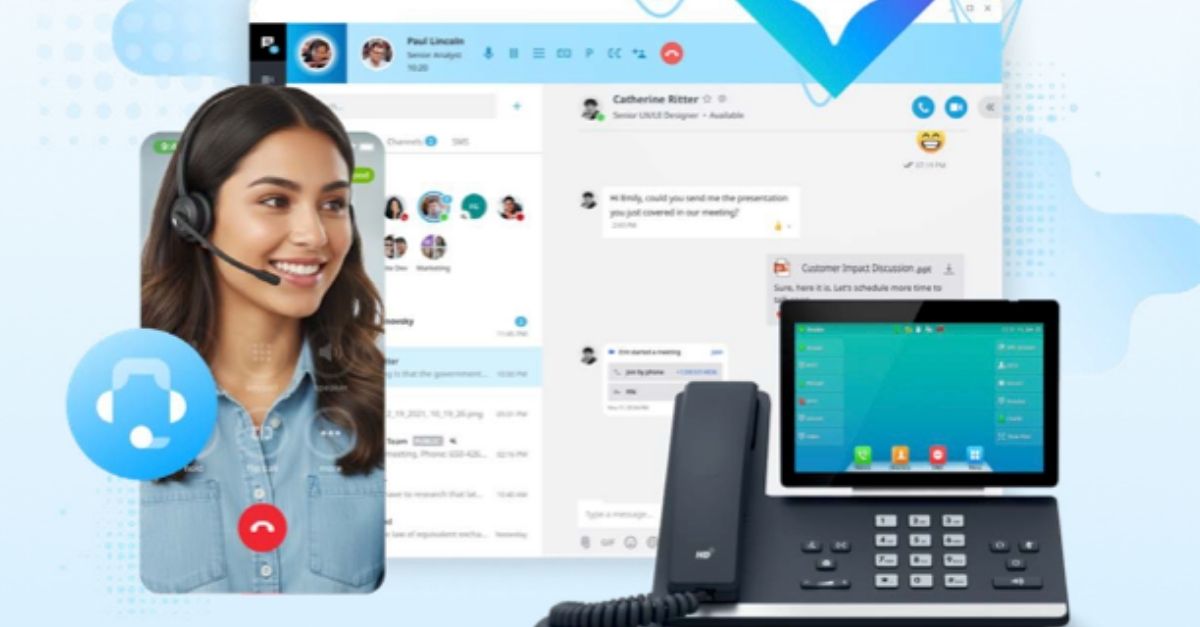
For a long time, business phone systems were exactly what they sounded like—desk phones used to make and receive calls.
Today, they do a lot more.
Modern business communication platforms now combine calling, video meetings, messaging, mobile apps, collaboration tools, and AI-powered features into a single connected system.
And for many businesses, that shift is changing far more than how calls are handled.
It’s changing how teams communicate, collaborate, respond to customers, and manage day-to-day work.
Communication Has Moved Beyond the Desk Phone
Business communication used to happen across separate systems. Phone calls lived on desk phones, meetings happened in conference rooms, messaging relied on email, notes were captured manually, and mobile communication often felt disconnected from the rest of the organization.
Over time, that created inefficiencies.
Employees switched between platforms. Important details were missed. Follow-ups depended on handwritten notes or memory. Teams spent time searching for information instead of acting on it.
Today’s communication platforms are designed to bring those tools together.
Modern Business Phone Systems Now Include More Than Calling
Cloud-based communication platforms now bring together voice calling, video meetings, business texting, mobile communication, team collaboration, Microsoft Teams integration, AI-powered summaries, transcription, and automated note-taking into a single connected experience.
The goal is no longer just making calls possible.
It’s making communication easier to manage across the entire business.
Explore cloud communication tools designed for modern businesses →
Why AI Is Becoming Part of Business Communications
One of the biggest changes in modern communication platforms is the growing use of AI-powered assistants and “digital teammates.”
These tools are designed to work alongside employees by helping reduce repetitive administrative tasks.
Instead of manually taking notes during calls or meetings, AI tools can now:
- generate summaries
- identify key discussion topics
- capture next steps
- create searchable transcripts
- help teams stay focused during conversations
That means less time spent documenting conversations—and more time acting on them.
Meetings and Calls Are Becoming More Actionable
For many businesses, communication doesn’t stop when the meeting or phone call ends.
Instead of scrambling through notes, employees can quickly review meeting summaries, transcripts, key discussion topics, action items, and customer conversation details.
AI-powered call recap and meeting recap tools help simplify that process by automatically organizing conversation details into usable summaries and action items.
Instead of scrambling through notes, employees can quickly review:
- meeting summaries
- transcripts
- key topics
- action items
- customer conversation details
This helps reduce missed information while improving responsiveness and collaboration across teams.
See how AI-powered communication tools help simplify meetings, calls, and follow-up →
AI Assistants Are Helping Teams Work More Efficiently
Modern communication platforms are also introducing AI assistants that help employees complete routine tasks more efficiently.
Depending on the platform, AI assistants may help users:
- draft messages and emails
- summarize conversations
- answer questions
- translate content
- automate repetitive communication tasks
These tools aren’t replacing employees.
They’re helping employees spend less time on manual admin work and more time focused on customers, collaboration, and higher-value activities.
Business Communication Is Becoming More Connected
As businesses continue adopting cloud communication platforms, the focus is shifting from isolated tools to connected experiences.
Instead of managing separate platforms for calls, meetings, messaging, collaboration, mobile communication, and follow-up documentation, many businesses are looking for ways to simplify communication into one connected experience.
The result is improved visibility, faster responsiveness, stronger collaboration, greater flexibility for remote and hybrid teams, and improved operational efficiency.
Organizations evaluating business communication platforms are often considering more than phone features alone. Collaboration requirements, customer experience goals, mobility, AI capabilities, integration needs, and long-term business objectives all influence the right solution.
Taking a structured approach to evaluating technology can help ensure communication investments support how employees work today and how the organization plans to grow in the future.
Learn how to evaluate business technology solutions →
Talk to KDI about building a smarter business communication strategy →
The Right Communication System Should Support How Your Business Works
Every business communicates differently.
Some organizations need stronger collaboration tools. Others want to improve responsiveness, simplify customer communication, support hybrid work, or reduce the amount of time employees spend on repetitive tasks.
The right communication platform should support those goals—not create more complexity.
Where Business Communication Is Headed Next
Business phone systems are no longer just about phones.
They’ve become communication platforms designed to support collaboration, mobility, customer experience, and increasingly, AI-assisted productivity.
And as businesses continue looking for ways to work smarter and respond faster, communication tools will likely continue evolving beyond simple calling features into connected business systems that support how work actually gets done.
Related Business Communication Solutions
Explore additional communication and collaboration solutions from KDI:
- Contact Center Solutions →
- Microsoft Teams Communication Solutions →
- AI Communication Tools →
- Cloud Business Communications →
Business Phone System FAQs
What is a modern business phone system?
Modern business phone systems include cloud calling, video meetings, business texting, collaboration tools, mobile apps, and AI-powered communication features.
What is cloud communication?
Cloud communication systems allow businesses to manage calls, meetings, messaging, and collaboration over the internet instead of traditional on-premise phone hardware.
What is unified communications?
Unified communications brings together calling, messaging, meetings, collaboration, and communication tools into one connected platform.
Can business phone systems integrate with Microsoft Teams?
Yes. Many modern communication platforms integrate with Microsoft Teams to support calling, meetings, messaging, and collaboration in one environment.
How are businesses using AI in communication systems?
Businesses are using AI-powered communication tools for meeting summaries, call recaps, transcription, customer interaction support, and administrative task automation.
