








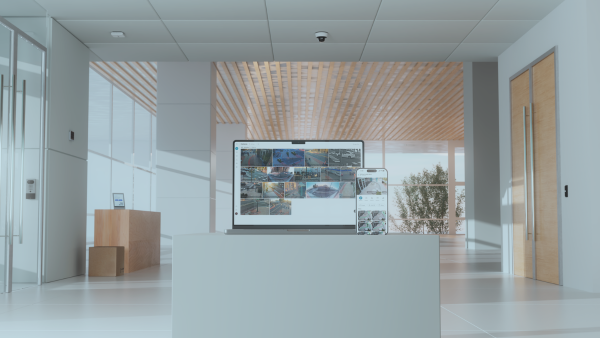
Artificial intelligence seems to be everywhere right now. From customer service to productivity software, businesses are hearing about AI in nearly every conversation about technology.
Physical security is no exception. Today’s physical security solutions can do much more than simply record video.
Many organizations have more security footage available than they can realistically review, making it difficult to identify important events quickly.
While many people still think of security systems as cameras that simply record video, today’s systems can do much more. Artificial intelligence is helping organizations identify potential issues faster, reduce unnecessary alerts, and improve visibility across their facilities.
The result is a shift from simply recording events to providing information that helps organizations make better decisions.
Security Is No Longer Just About Recording Video
For years, security cameras served one primary purpose: capturing footage that could be reviewed after an incident occurred. If a problem happened, someone had to spend time searching video, trying to locate a vehicle, identify a person, or determine exactly what happened.
Many organizations also became frustrated by constant motion alerts. Changes in lighting, weather, animals, or routine activity could trigger notifications that required attention but ultimately posed no concern.
Artificial intelligence is helping reduce this noise.
Today’s systems can often recognize the difference between people, vehicles, and general movement. Instead of receiving dozens of alerts throughout the day, organizations can focus on the activity that may actually require attention.
Faster Responses Begin with Better Information
One of the biggest advantages of AI is the ability to provide context.
If activity occurs outside a building after hours, staff can often receive an alert along with video that shows exactly what is happening. Rather than responding blindly, organizations have information that allows them to make better decisions.
This can be especially valuable for schools, municipalities, healthcare facilities, warehouses, and organizations with multiple locations where staff may not always be on-site.
In many cases, AI helps reduce the amount of time spent investigating events because users can locate activity much faster than they could by manually reviewing hours of footage.
Consider a school campus after hours. Instead of receiving multiple motion alerts caused by weather, animals, or passing vehicles, administrators can receive alerts when a person enters a restricted area. A warehouse may want to know if activity occurs near a loading dock overnight. These types of intelligent alerts help organizations focus on situations that may actually require attention.
AI Helps Organizations Focus Their Attention
Artificial intelligence does not replace security staff or make decisions independently.
Instead, it helps direct attention to the areas that may require it.
Organizations may want to know if someone enters a restricted area after hours, if activity occurs near a building entrance overnight, or if a vehicle remains in a parking lot longer than expected. By identifying unusual activity, AI helps organizations respond more quickly and potentially address issues before they become larger problems.
Security Is Becoming More Proactive
Traditional security systems often helped organizations understand what happened after an incident.
Today’s systems increasingly help organizations respond while events are taking place.
Some organizations use live video, mobile alerts, or audio capabilities to communicate with individuals on-site when suspicious activity occurs. Others use intelligent alerts to notify staff when activity takes place outside normal operating hours.
The goal is not simply to record incidents. The goal is to improve awareness and support faster responses.
AI Has Applications Across Many Industries
Schools can improve visibility across campuses and receive alerts regarding unauthorized activity.
Healthcare organizations can monitor restricted areas and improve safety.
Manufacturing facilities can keep a closer eye on loading docks, inventory areas, and building entrances.
Municipalities can monitor multiple facilities from a single platform.
Retail businesses can investigate incidents more quickly and improve visibility throughout their locations.
While the needs of each organization may differ, the underlying goal remains the same: better information that helps people make better decisions.
What Organizations Are Looking For Today
At KDI, conversations around physical security have changed considerably over the past several years. Organizations are no longer simply asking about cameras. They want better visibility, faster response times, and systems that provide meaningful information when events occur.
Schools want to improve campus safety. Municipalities need visibility across multiple facilities. Businesses want to reduce false alarms, improve response times, and take a more comprehensive approach to both physical and cybersecurity risks.
What This Means for Businesses
Artificial intelligence is changing physical security because it allows organizations to spend less time searching for information and more time responding to it.
Instead of reviewing hours of footage, security teams can quickly locate events. Instead of managing constant notifications, they can focus on activity that matters. Instead of simply documenting incidents, they can gain greater visibility into their facilities and operations.
Technology alone cannot solve every security challenge. Organizations still need procedures, training, and people making decisions.
But artificial intelligence is helping modern security systems become more useful, more proactive, and more valuable to the organizations that rely on them every day.
Curious how modern physical security solutions can improve visibility, reduce unnecessary alerts, and help your organization respond faster? KDI can help evaluate your current environment and identify opportunities to improve security across your facilities through a Physical Security Assessment.
Frequently Asked Questions
Does AI replace security personnel?
No. AI helps identify activity and provide information, but people still make decisions and respond to incidents.
Can AI reduce false alarms?
Yes. Modern systems can often distinguish between people, vehicles, and other movement, reducing unnecessary alerts.
Is AI security only for large organizations?
No. Schools, municipalities, nonprofits, and businesses of all sizes are using these technologies.
How does AI help investigations?
AI can help users locate activity much faster than manually reviewing video footage.
Related Articles
Building A Smarter Physical Security Strategy →
The Hidden Costs of Downtime →
Why Businesses Still Struggle to Find Information Quickly →
Your Technology Shouldn’t Slow Your Business Down →
