








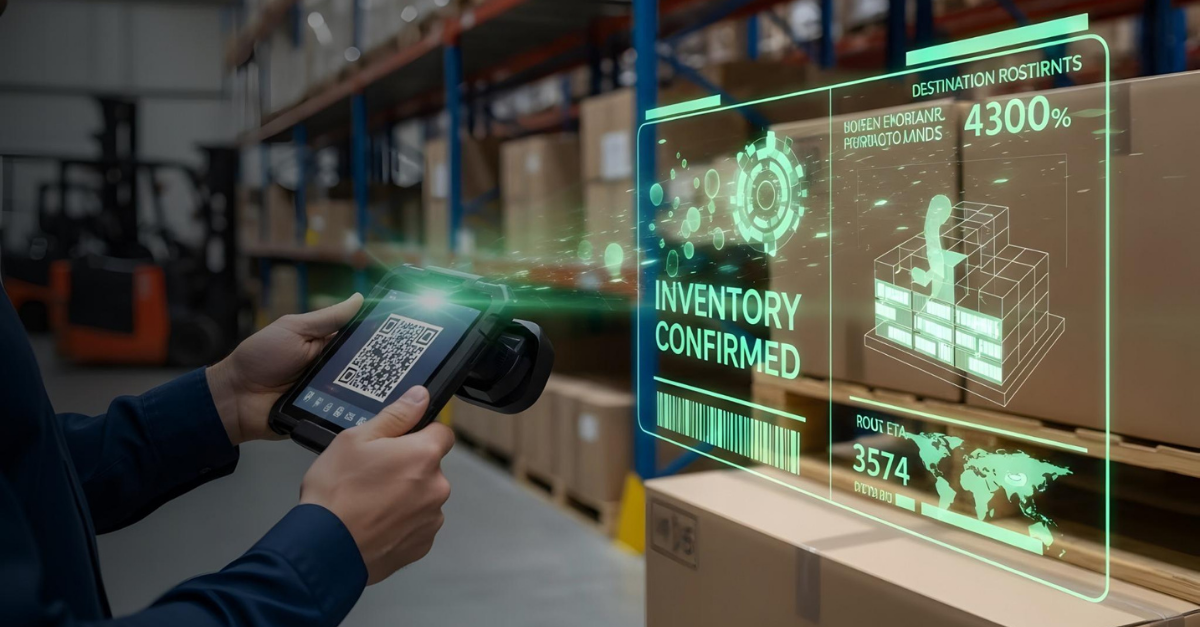
You may not have heard of Sunrise 2027 yet — but chances are it will impact your business.
By 2027, many retailers and supply chain partners will require 2D barcodes (such as QR codes or GS1 DataMatrix) in place of traditional 1D barcodes. This shift is being driven by GS1, the global organization responsible for barcode standards, as part of an industry-wide effort to improve traceability, data accuracy, and operational efficiency.
While this change brings new opportunities, it also presents challenges for organizations running older labeling systems or legacy thermal printers.
The good news? With the right approach, this transition doesn’t have to mean expensive software rewrites or major workflow disruption.
What Is Sunrise 2027?
According to GS1, the organization that sets global barcode standards, Sunrise 2027 represents a shift toward 2D barcodes designed to improve traceability and data accuracy across the supply chain. These newer barcode formats can store significantly more information than traditional barcodes, helping organizations improve:
- Product traceability
- Inventory accuracy
- Supply chain visibility
- Compliance and data consistency
While 2027 may sound far off, many organizations are already preparing — and some retailers are beginning to require compatibility well before that date.
Why This Matters for Your Business
For most organizations, the challenge isn’t the barcode itself — it’s the infrastructure behind it.
Many existing labeling environments rely on:
- Older thermal printers not designed for 2D barcode output
- Hard-coded or legacy label software
- Manual processes that increase errors and slow operations
As standards evolve, these systems can become harder to maintain, more expensive to update, and more prone to disruption.
Simply replacing a printer isn’t always enough. Without the right technology in place, businesses may face:
- Costly application changes
- Delays in compliance
- Increased reliance on IT or third-party support
- Limited flexibility as requirements evolve
A Smarter Way to Prepare
Forward-thinking organizations are using Sunrise 2027 as an opportunity to evaluate and modernize their labeling environments — not as a last-minute compliance exercise.
With the right thermal printing strategy, businesses can:
- Support 2D barcodes without rewriting applications
- Reduce dependence on custom programming
- Improve accuracy and operational efficiency
- Prepare for future standards with confidence
Modern thermal printing platforms now allow organizations to adapt to new barcode requirements while maintaining compatibility with existing workflows — helping reduce risk and avoid unnecessary complexity.
How KDI Helps
At KDI, we take a practical, business-first approach to thermal printing and labeling. Our team works with organizations to assess their current environment, identify potential gaps, and recommend solutions that align with both today’s needs and tomorrow’s requirements.
Whether you’re actively planning for Sunrise 2027 or simply want to understand how your current setup may be impacted, we help you take a proactive, informed approach — without disruption to your day-to-day operations.
Ready to Prepare for What’s Next?
Learn how KDI can help you prepare for Sunrise 2027 and modernize your thermal printing environment.